Tim Urban's TED talk, reviewed: funny, famous, and half right
Tim Urban's 2016 TED talk describes the procrastinator's brain as a rational decision-maker hijacked by an Instant Gratification Monkey, kept in check only by a deadline-triggered Panic Monster. It is the best-known introduction to procrastination in existence, and its closing point, that the worst procrastination has no deadline at all, is the part worth remembering.
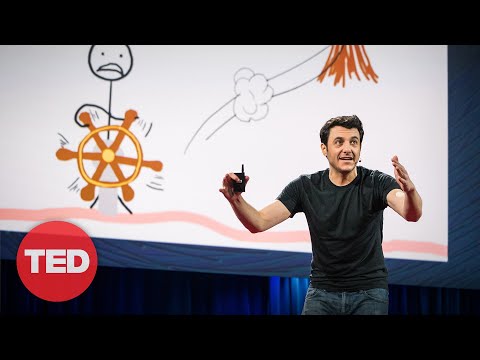
Watching loads the player from youtube-nocookie.com. Video by Tim Urban (TED); embedded for review purposes.
| Creator | Tim Urban (TED) |
|---|---|
| Length | 14 minutes |
| Published | 2016 |
| Type | TED talk |
| Best for | A first, funny, surprisingly accurate mental model of why you delay |
What the talk argues
Urban, the writer behind Wait But Why, presents procrastination as a battle between a Rational Decision-Maker and an Instant Gratification Monkey who only cares about easy and fun. The only thing the monkey fears is the Panic Monster, who wakes up when deadlines loom. His sharpest observation comes at the end: the truly damaging procrastination is the kind with no deadline, no panic monster, and therefore no natural end, the career you never start, the relationship you never fix. The Life Calendar of weeks he closes with has sold a lot of posters for a reason.
Where it matches the research
The monkey is a cartoon of impulsiveness, which Steel's 2007 meta-analysis identified as the strongest personality predictor of procrastination. The Panic Monster is a cartoon of temporal motivation theory: motivation climbs as delay shrinks, which is exactly why deadlines produce action. And his no-deadline warning matches the evidence that unstructured, long-horizon goals are where chronic procrastination does the most damage. As a mental model for a 14-minute talk, it is more accurate than it has any right to be.
Where it falls short
The talk explains the problem and then ends. There is no technique, no next step, and no mention of the emotion-regulation side, the shame, anxiety and task aversion that the post-2013 literature puts at the centre of chronic procrastination. Watching it feels like progress, which is itself a subtle trap: it is the most entertaining way ever devised to procrastinate on dealing with procrastination. Watch it once for the vocabulary, then move to something with instructions.
The talk is a metaphor, not a method, but the metaphor tracks real findings on impulsiveness and deadline-driven motivation. It predates the mainstream shift toward the emotion-regulation account and does not mention it.
Steel, P. (2007). The nature of procrastination: A meta-analytic and theoretical review of quintessential self-regulatory failure. Psychological Bulletin, 133(1), 65-94. https://doi.org/10.1037/0033-2909.133.1.65
Related
Steel's 2007 meta-analysisGlossaryImplementation intentionsWhy you procrastinate
Frequently asked questions
Is Tim Urban's TED talk actually useful, or just funny?
Both, with limits. It gives you an accurate vocabulary for impulsiveness and deadline pressure, and its warning about deadline-free procrastination is genuinely important. But it contains no techniques, so pair it with a practical method like implementation intentions.