TED-Ed's five-minute procrastination explainer, reviewed
This 2022 TED-Ed animation explains procrastination as an emotion-regulation problem: the brain treats an aversive task as a threat, avoidance relieves the discomfort now, and the relief rewards the avoidance. It is the closest thing on YouTube to a direct summary of the current research consensus, compressed into five minutes.
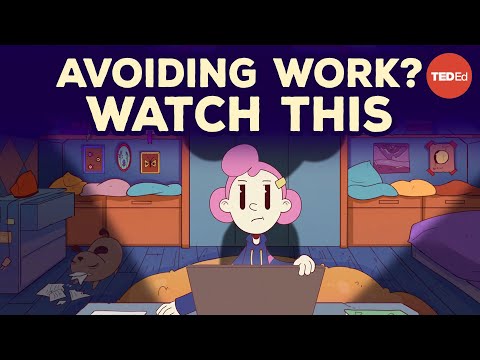
Watching loads the player from youtube-nocookie.com. Video by TED-Ed; embedded for review purposes.
| Creator | TED-Ed |
|---|---|
| Length | 5 minutes |
| Published | 2022 |
| Type | Animated explainer |
| Best for | The scientific consensus in the time it takes to make tea |
What the video argues
The animation follows a student avoiding an essay and walks through what is happening underneath: the task triggers negative feelings, avoiding it removes those feelings instantly, and that instant relief teaches the brain to avoid again. It names the real drivers, task aversion, self-doubt, fear of judgement, and correctly says procrastinators are not lazy but caught in a mood-repair loop that trades long-term goals for short-term emotional relief. It closes with self-compassion and breaking tasks into smaller steps.
Where it matches the research
Almost everywhere, which is rare for this genre. The mood-repair loop is Sirois and Pychyl's short-term mood repair account almost verbatim. The self-compassion advice tracks Wohl's finding that students who forgave themselves for procrastinating procrastinated less on the next exam, and Sirois's work linking self-compassion to lower procrastination. TED-Ed cites its sources, and it shows.
The honest criticism
Five minutes buys accuracy but not depth. The practical advice amounts to two sentences at the end, and there is nothing on impulsiveness, deadlines or the expectancy side that Steel's work covers. It tells you what procrastination is, not what to do on Monday morning. Treat it as the correct diagnosis, then get the treatment from a technique page.
The video is essentially a faithful animation of the emotion-regulation literature, the same papers our research library summarises.
Sirois, F., & Pychyl, T. (2013). Procrastination and the priority of short-term mood regulation. Social and Personality Psychology Compass, 7(2), 115-127. https://doi.org/10.1111/spc3.12011
Wohl, M. J. A., Pychyl, T. A., & Bennett, S. H. (2010). I forgive myself, now I can study. Personality and Individual Differences, 48(7), 803-808. https://doi.org/10.1016/j.paid.2010.01.029
Related
Sirois & Pychyl on mood repairSelf-forgiveness studySelf-compassion evidenceWhy you procrastinate
Frequently asked questions
Is the TED-Ed procrastination video accurate?
Yes, unusually so. It presents the emotion-regulation account that dominates current research, and its two closing tips, self-compassion and smaller steps, are both evidence-backed. Its only weakness is brevity.