Huberman's dopamine and procrastination episode, reviewed
This 2023 Huberman Lab episode explains motivation through dopamine peaks, troughs and baselines, then derives protocols: to escape a procrastination slump, do something briefly harder or more aversive than the avoided task, use cold exposure as one option, and protect your dopamine baseline. It is a neuroscience lecture first and a procrastination resource second.
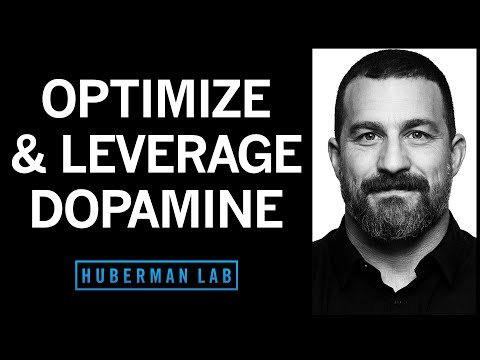
Watching loads the player from youtube-nocookie.com. Video by Andrew Huberman (Huberman Lab); embedded for review purposes.
| Creator | Andrew Huberman (Huberman Lab) |
|---|---|
| Length | 118 minutes |
| Published | 2023 |
| Type | Podcast lecture |
| Best for | The neuroscience of motivation, with procrastination as a case study |
What the episode argues
Huberman spends most of the runtime on dopamine dynamics: motivation tracks the slope of dopamine relative to baseline, rewards feel weaker when the baseline is depleted, and stimulation-heavy habits flatten your capacity to find effort rewarding. For procrastination specifically, his signature claim is that you can exit an amotivated state faster by steering into something more effortful or aversive than the task you are avoiding, brief cold exposure being his standard example, because the rebound from the trough restores drive.
Where it aligns with the research
The dopamine material reflects mainstream findings on reward prediction and motivational salience, and the general advice to limit cheap stimulation is consistent with what the environment-design literature would predict. But the specific 'do something harder' protocol is Huberman's extrapolation from mechanism, not a tested procrastination intervention; the intervention trials reviewed in the procrastination literature centre on cognitive-behavioural approaches, implementation intentions and self-regulation training, none of which involve cold water. The episode also barely engages the emotion-regulation account that dominates the field.
The honest criticism
Length and framing. Two hours is a big ask, and treating procrastination as mostly a dopamine-management problem quietly reframes an emotional problem as a chemical one, which suits viewers who like protocols but misses why the essay, the tax return or the difficult phone call is being avoided in the first place. Watch it to understand motivation's machinery; do not mistake mechanistic plausibility for trial evidence.
Strong on neuroscience sourcing, thin on procrastination-specific trials. The tested interventions in the literature look quite different from the episode's protocols.
Rozental, A., et al. (2017). Treating procrastination using cognitive behavioral therapy: A pragmatic randomized controlled trial. Journal of Consulting and Clinical Psychology, 86(2), 179-191. https://doi.org/10.1037/ccp0000199
van Eerde, W., & Klingsieck, K. B. (2018). Overcoming procrastination? A meta-analysis of intervention studies. Educational Research Review, 25, 73-85. https://doi.org/10.1016/j.edurev.2018.09.002
Related
Dopamine detox, examinedEnvironment designWhat intervention trials show
Frequently asked questions
Does the cold-exposure advice for procrastination have direct evidence?
No. It is a plausible extrapolation from dopamine research, not a tested procrastination intervention. The intervention meta-analyses point to CBT-style approaches and implementation intentions as the methods with trial support.