The War of Art by Steven Pressfield, an honest summary
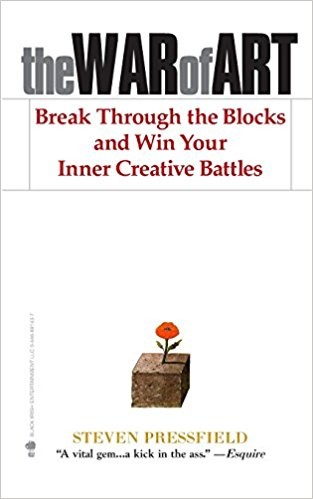
The War of Art (2002) personifies every force that stops you creating as 'Resistance', and prescribes 'turning pro': showing up to do the work on a schedule, like a professional, regardless of mood. It is a book about creative procrastination written as aphorism and manifesto, not as evidence.
| Author | Steven Pressfield |
|---|---|
| Published | 2002 |
| Core framework | Resistance as the universal enemy; defeat it by 'turning pro' and working on schedule |
| Maps to techniques | Time blocking, habit stacking, deep work |
The ideas that hold up
- Naming avoidance as an external force gives useful distance: noticing 'that is Resistance' resembles the defusion moves used in acceptance-based therapies.
- The observation that Resistance is strongest for the work that matters most matches the finding that procrastination tracks task aversion and fear, not laziness.
- 'Turning pro', working at set times whatever the mood, is scheduling over motivation, the same move the research literature supports.
Take with a pinch of salt
- There is no research in it at all; the later chapters attribute creativity to muses and angels, which you can read as metaphor or skip.
- The tone is drill-sergeant: inspiring for some readers, shaming for others, and shame reliably worsens procrastination rather than fixing it.
- It offers diagnosis and attitude but almost no method; you will need concrete systems from elsewhere.
None directly; it is a work of motivational literature. Its 'work on schedule regardless of mood' prescription happens to align with what implementation-intention research recommends.
Gollwitzer, P. M., & Sheeran, P. (2006). Implementation intentions and goal achievement: A meta-analysis of effects and processes. Advances in Experimental Social Psychology, 38, 69–119. https://doi.org/10.1016/S0065-2601(06)38002-1
Related
Frequently asked questions
Is The War of Art scientific?
No, and it does not pretend to be. Read it for motivation and the vocabulary of Resistance, then get your actual methods from evidence-based techniques like time blocking and implementation intentions.