The Now Habit by Neil Fiore, an honest summary
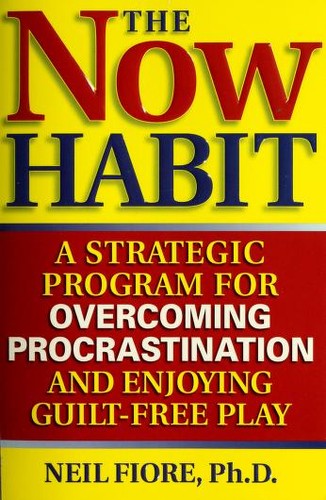
The Now Habit (1988) argues that procrastination is a way of coping with the anxiety attached to starting or finishing tasks, especially fear of failure and perfectionism. Its signature tools are the 'unschedule', where you book leisure first and log work after it happens, and replacing 'I have to' self-talk with 'I choose to'.
| Author | Neil Fiore |
|---|---|
| Published | 1988 |
| Core framework | Procrastination as anxiety management; the unschedule, guilt-free play, 'I choose to' self-talk |
| Maps to techniques | Timeboxing, implementation intentions, time blocking |
The ideas that hold up
- Framing procrastination as emotion and anxiety management, decades before it became the research consensus, is the book's lasting contribution.
- Scheduling guaranteed leisure reduces the sense that starting work means endless work, which attacks a real driver of avoidance.
- The 'thirty minutes of quality work' unit is a sound entry point: small, bounded commitments are consistently easier to start than open-ended ones.
- Its treatment of perfectionism as a cause of delay is well supported: fear of a flawed result makes not starting feel safer.
Take with a pinch of salt
- The book predates most modern procrastination research, so it cites little direct evidence; it is right largely by clinical intuition.
- Some framing shows its age, and the workaholism chapters read as a period piece.
- The unschedule requires diligent logging, and people who procrastinate on tracking systems tend to abandon it within weeks.
Written from clinical practice rather than trials, but its anxiety-based account anticipated the emotion-regulation model that later research confirmed.
Sirois, F., & Pychyl, T. (2013). Procrastination and the priority of short-term mood regulation: Consequences for future self. Social and Personality Psychology Compass, 7(2), 115–127. https://doi.org/10.1111/spc3.12011
Related
TimeboxingImplementation intentions
Frequently asked questions
Is The Now Habit still relevant?
Yes. It is dated in style but not in substance: its core claim, that procrastination is anxiety management rather than laziness, is now the mainstream research position. The unschedule remains a genuinely distinctive tool.