Getting Things Done by David Allen, an honest summary
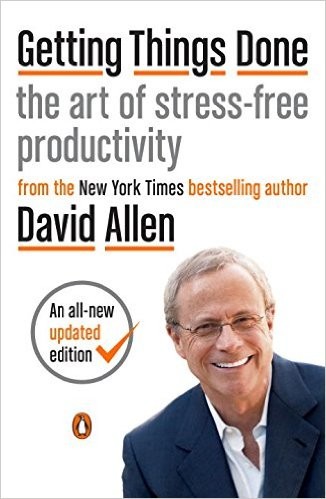
Getting Things Done (2001, revised 2015) is a complete workflow for handling commitments: capture everything into trusted places, clarify each item into a physical next action, organise by context, review weekly, and engage. Its promise is 'mind like water': stress drops because nothing is being tracked in your head.
| Author | David Allen |
|---|---|
| Published | 2001, revised 2015 |
| Core framework | Capture, clarify, organise, reflect, engage; the two-minute rule; the weekly review |
| Maps to techniques | GTD, two-minute rule, time blocking |
The ideas that hold up
- The open-loops insight is supported: unfinished tasks intrude on attention (the Zeigarnik effect), and research shows that making a concrete plan for a task reduces the intrusions even before the task is done.
- Defining the physical next action attacks a real cause of procrastination, since vague items like 'sort out insurance' are avoided partly because they are undefined.
- The original two-minute rule, do anything actionable in under two minutes immediately, is a sensible triage heuristic that later books adapted.
Take with a pinch of salt
- GTD is high-maintenance: without the weekly review the system silently rots, and skipping the review is itself a classic procrastination target.
- It tells you how to track commitments, not which ones matter; you can run a flawless GTD system full of trivial next actions.
- The full apparatus of contexts and lists was designed before smartphones and can feel over-engineered; many people keep only capture, next actions and the weekly review.
- It assumes tasks are avoided because they are disorganised; when avoidance is emotional, a perfectly organised list changes little.
Written from consulting practice, but its core mechanism gained support afterwards: planning a task offloads it from working memory, which matches the 'mind like water' claim.
Masicampo, E. J., & Baumeister, R. F. (2011). Consider it done! Plan making can eliminate the cognitive effects of unfulfilled goals. Journal of Personality and Social Psychology, 101(4), 667–683. https://doi.org/10.1037/a0024192
Related
GTD (the technique)Two-Minute Rule
Frequently asked questions
Does GTD help with procrastination?
It helps with the share of procrastination caused by vagueness and overwhelm, which is real but partial. If you avoid tasks you have already clearly defined, the problem is emotional, and techniques like implementation intentions or body doubling will do more than better lists.
Is Getting Things Done outdated?
The tooling examples are, the principles are not. Capture everything, decide the next action, and review weekly all translate directly to modern apps; most current task managers are built on GTD's vocabulary.