Essentialism by Greg McKeown, an honest summary
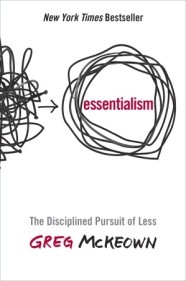
Essentialism (2014) argues that almost everything is noise and only a few things matter, so the disciplined move is to explore options, eliminate the non-essential, and build routines that make the vital few effortless. It is a book about choosing work, not about starting it, which makes it a partial fit for procrastination.
| Author | Greg McKeown |
|---|---|
| Published | 2014 |
| Core framework | Explore, eliminate, execute; say no by default, apply extreme criteria to commitments, protect buffer time |
| Maps to techniques | Eat the frog, Ivy Lee method, time blocking |
The ideas that hold up
- A share of what looks like procrastination is really overload: too many commitments make every task compete, and cutting the list attacks that directly.
- The 'if it is not a clear yes, it is a no' filter is a usable decision rule that reduces the accumulating half-commitments that later become avoidance.
- Building in buffers echoes the planning-fallacy research: people reliably underestimate task time, and padding estimates reduces the deadline panic that feeds delay.
- Protecting time to think and choosing one priority mirrors what makes daily-highlight and frog-first methods work.
Take with a pinch of salt
- It is honestly a prioritisation book, not a procrastination book: if you delay the one task you know matters, trimming your list will not fix that.
- The core idea fits an essay; the book stretches it with business anecdotes, and many readers report the second half repeats the first.
- Saying no by default assumes a level of professional autonomy that many employees, students and carers simply do not have.
Largely anecdote and business storytelling. Its buffer advice aligns with planning-fallacy research, but the book itself cites little of it.
Kahneman, D., & Tversky, A. (1979). Intuitive prediction: Biases and corrective procedures. TIMS Studies in Management Science, 12, 313-327.
Related
Frequently asked questions
Does Essentialism help with procrastination?
Indirectly. It helps if your delay comes from having too much on: fewer commitments mean less overwhelm and clearer priorities. It offers little for the harder case where you avoid one important task you have already chosen.