Atomic Habits by James Clear, an honest summary
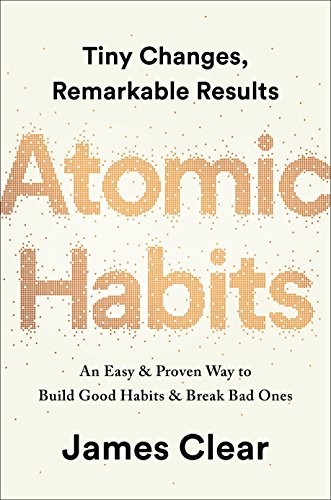
Atomic Habits (2018) argues that lasting change comes from small, systematised habits rather than motivation: make good behaviours obvious, attractive, easy and satisfying, and identity follows behaviour. For procrastinators, its most useful exports are the Two-Minute Rule, habit stacking, and environment design.
| Author | James Clear |
|---|---|
| Published | 2018 |
| Core framework | Cue → craving → response → reward; the four laws of behaviour change |
| Maps to techniques | Two-Minute Rule, habit stacking, environment design, temptation bundling |
The ideas that hold up
- Starting tiny (the Two-Minute Rule) aligns with implementation-intention research and the finding that task aversion is mostly anticipatory.
- Habit stacking is a direct application of implementation intentions, one of the best-evidenced behaviour-change tools.
- Environment design over willpower matches self-control research: people who seem disciplined mostly arrange their lives to face fewer temptations.
Take with a pinch of salt
- The '1% better every day compounds to 37x' arithmetic is a metaphor, not a model, skills plateau and regress.
- The 'habits run on autopilot after ~66 days' figure is a mean from one study (Lally et al., 2010) with enormous individual variance (18–254 days).
The book popularises established behavioural science rather than presenting new research; its strongest chapters track the implementation-intentions and habit-formation literatures.
Lally, P., van Jaarsveld, C. H. M., Potts, H. W. W., & Wardle, J. (2010). How are habits formed: Modelling habit formation in the real world. European Journal of Social Psychology, 40(6), 998–1009. https://doi.org/10.1002/ejsp.674
Related
Frequently asked questions
Is Atomic Habits worth reading for procrastination specifically?
Yes, with focus: chapters on the Two-Minute Rule, habit stacking and environment design are directly usable. If procrastination is your only interest, Solving the Procrastination Puzzle by Timothy Pychyl is more targeted.